Qinghai-Tibet Plateau · Heaven-Sent Stone · 2026-05-09
Dzi Beads: The Thousand-Year Guardian Stone — A Journey from Bon Amulet to Treasured Heritage
Explore the Bon origins of dzi beads, the meaning of their eyes, Five Elements pairing, and a 6-step authentication guide for genuine Tibetan dzi.
Quick Answer
Explore the Bon origins of dzi beads, the meaning of their eyes, Five Elements pairing, and a 6-step authentication guide for genuine Tibetan dzi.
- Core Topic
- Explore the Bon origins of dzi beads, the meaning of their eyes, Five Elements pairing, and a 6-step authentication guide for genuine Tibetan dzi.
- Location
- Qinghai-Tibet Plateau · Heaven-Sent Stone
- Category
- Blog
- Published
- 2026-05-09
- Updated
- 2026-05-09
- Author
- Snowland Treasures Materials Research Team
- Editor
- Snowland Treasures Review Team
- Published
- 2026-05-09
- Updated
- 2026-05-09
- Publisher
- Snowland Treasures
Full Details
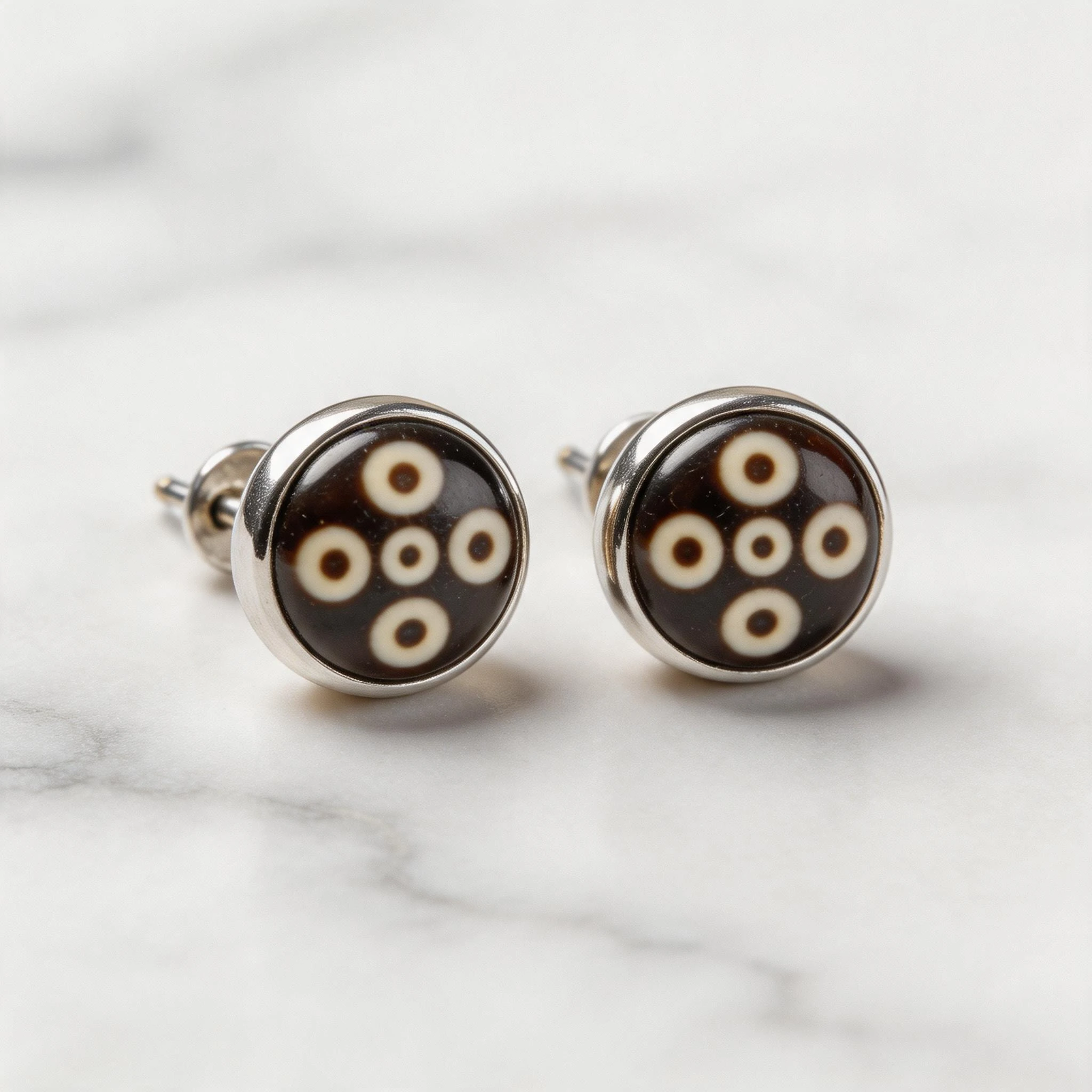
<h1>Dzi Beads: The Thousand-Year Guardian Stone — A Journey from Bon Amulet to Treasured Heritage</h1> <hr> <blockquote> <p><em>On the windswept plateau of northern Tibet, an elderly woman unfastens a string of beads from her neck. The agate she holds is dark brown, almost black, covered in a web of fine cracks — what collectors call "nāga skin." Her family has passed it down for seven generations. To her, it's not jewelry. It's a protector.</em></p> </blockquote> <hr> <blockquote> <p><strong>A note on cultural respect:</strong> Dzi beads are a living part of Tibetan and Himalayan heritage. This article is written with deep respect for the cultures, traditions, and communities that have cherished these beads for millennia. We believe knowledge — not mystery — is how cultural treasures should be shared. Every bead sold at Snowland Sacred Treasures is sourced from legitimate suppliers. None of our beads are obtained through looting, illegal excavation, or unauthorized export. If you are an EU resident, please note that antique dzi beads (250+ years old) may require an import license under EU Regulation 2019/880 — we're happy to assist with documentation.</p> </blockquote> <hr> <h2>Part I: What Is a Dzi Bead?</h2> <p>If you've ever browsed Tibetan jewelry online or wandered into a Himalayan craft shop, you've seen them — dark agate beads striped with ivory-white patterns, dotted with mysterious "eyes." In Tibetan, they're called <strong>dzi</strong> (pronounced "zee"), meaning <em>shine, brightness, splendor</em>. In Chinese, they're <strong>天珠</strong> (tiān zhū) — <em>heaven beads</em>.</p> <p>Dzi beads have been worn across the Himalayas for over 3,000 years. They appear in Tibet, Nepal, Bhutan, Ladakh, and beyond. They're made from agate, etched with alkali to create white patterns on a dark ground. Each bead is unique, and more importantly, each carries a story.</p> <p>But here's the twist: <strong>most dzi beads you see today are not what they claim to be.</strong></p> <p>To understand why — and to learn how to tell the difference — we need to go back to where it all began.</p> <hr> <h2>Part II: A History Older Than Buddhism</h2> <p>Here's something that surprises most people: <strong>dzi beads have nothing to do with Tibetan Buddhism.</strong></p> <p>Not originally, anyway.</p> <p>The earliest dzi beads predate Buddhism's arrival in Tibet by over a thousand years. The Tibetan plateau, around 1300 BCE, was dominated by <strong>Bon</strong> (苯教) — a shamanistic, animistic religion that worshipped the natural world: the sky, the earth, mountains, rivers, and celestial bodies.</p> <p>The patterns on ancient dzi beads reflect this. Circles for the sun. Waves for water. Squares for the earth. Zigzags for lightning. These weren't decorations — they were <strong>prayers carved in stone.</strong></p> <p>Bon priests, according to legend, would perform rituals in remote cemeteries. When a priest reached a state of spiritual attainment, it was said that dzi beads would <em>fall from the sky</em> — hence the name "heaven beads." They were worn as protective talismans, capable of warding off evil spirits and attracting guardian deities.</p> <h3>The "King's Treasure" Legend</h3> <p>Tibetan legend tells of a treasure deposited by King Da瑟 (Da-sè) 1,300 years ago. Inside, along with gold and precious gems, were dzi beads — so numerous they were said to <em>flow down the mountainside like a stream after rain</em>. Scholars believe this points to a time when Bon was the dominant religion, before Buddhism was introduced from India.</p> <h3>From Bon Amulet to Buddhist Treasure</h3> <p>When Buddhism arrived in Tibet (7th-9th century CE), it didn't erase Bon — it absorbed it. Many Bon practices, symbols, and sacred objects were woven into Tibetan Buddhist tradition. Dzi beads were among them.</p> <p>Over centuries, dzi beads became integrated into Buddhist practice:</p> <ul> <li>They were placed on Buddhist statues as offerings</li> <li>They were strung alongside coral, turquoise, and amber in traditional jewelry</li> <li>Lamas began to bless them with mantras</li> <li>They appeared in thangka paintings and on the crowns of Buddha statues at Jokhang Temple and Samye Monastery</li> </ul> <p>But as a Tibetan friend once put it: <em>"To us Tibetans, dzi beads are like diamonds — precious, yes, but they're jewelry, not religious tools. Women wear them to festivals to show status."</em></p> <p>The myth-making came later — and mostly from outside Tibet.</p> <hr> <h2>Part III: The Eyes Have It — Reading a Dzi Bead</h2> <p>The most recognizable feature of a dzi bead is its "eyes" — circular motifs carved or etched into the agate. The number of eyes determines the bead's meaning and power.</p> <table> <thead> <tr> <th>Eyes</th> <th>Meaning</th> </tr> </thead> <tbody><tr> <td><strong>1 Eye</strong></td> <td>Clarity of mind, wisdom enhancement. Rare and prized.</td> </tr> <tr> <td><strong>2 Eyes</strong></td> <td>Harmonious relationships. Good for couples.</td> </tr> <tr> <td><strong>3 Eyes</strong></td> <td>Wealth, health, and long life. One of the most popular.</td> </tr> <tr> <td><strong>4 Eyes</strong></td> <td>Protection from the Four Great Bodhisattvas. Balances the four elements.</td> </tr> <tr> <td><strong>5 Eyes</strong></td> <td>All five directions of wealth. Prosperity from all angles.</td> </tr> <tr> <td><strong>6 Eyes</strong></td> <td>Liberation from the Six Realms of suffering. Good health.</td> </tr> <tr> <td><strong>7 Eyes</strong></td> <td>Good fortune and blessing from the Medicine Buddha.</td> </tr> <tr> <td><strong>8 Eyes</strong></td> <td>The Eight Auspicious Symbols. Protection from all directions.</td> </tr> <tr> <td><strong>9 Eyes</strong></td> <td><strong>The most powerful.</strong> Contains the complete merit of all nine vehicles of Buddhism. Eliminates all misfortune. The king of dzi beads.</td> </tr> <tr> <td><strong>12+ Eyes</strong></td> <td>Rare and extremely powerful. Each additional eye expands the bead's spiritual scope.</td> </tr> </tbody></table> <img src="/images/blogs/2026-05-09-0142-dzi-bead-guide/five-eye-dzi.jpg" alt="Five-eye dzi bead ear studs in silver setting" /><h3>Beyond Eyes — Special Motifs</h3> <table> <thead> <tr> <th>Motif</th> <th>Meaning</th> </tr> </thead> <tbody><tr> <td><strong>Lotus Flower</strong></td> <td>Purity, enlightenment. <em>One of the most expensive dzi motifs.</em></td> </tr> <tr> <td><strong>Vase / Treasure Vase</strong></td> <td>The highest-grade dzi in Tibetan tradition. Called "eternal life vase."</td> </tr> <tr> <td><strong>Tiger Tooth / Tiger Stripes</strong></td> <td>Courage, strength, overcoming obstacles.</td> </tr> <tr> <td><strong>Swastika (卍)</strong></td> <td>Eternal light, boundless fortune, the indestructible nature of reality.</td> </tr> <tr> <td><strong>Round / Square (天地)</strong></td> <td>Heaven (circle) and Earth (square). Harmony and balance. Popular among business owners.</td> </tr> <tr> <td><strong>Dragon Eye</strong></td> <td>Supreme protection. The king of all protective symbols.</td> </tr> <tr> <td><strong>Wave / Water Pattern</strong></td> <td>Extreme rarity. Second only to lotus in value.</td> </tr> <tr> <td><strong>Longevity (Shou)</strong></td> <td>Long life, healthy aging.</td> </tr> </tbody></table> <hr> <h2>Part IV: Dzi and the Five Elements — Which Bead Is for You?</h2> <p>In traditional Chinese cosmology, everything is governed by the <strong>Five Elements</strong> (五行): Wood, Fire, Earth, Metal, and Water. A dzi bead's color, motif, and energy can be matched to your element to enhance your life's natural flow.</p> <h3>If You Are a <strong>Water</strong> Element (水命)</h3> <p><em>Personality traits: intuitive, adaptable, intelligent, deep-thinking</em></p> <p><strong>Recommended dzi beads:</strong></p> <ul> <li><strong>Wave/Rainbow pattern dzi</strong> — Naturally resonates with water energy</li> <li><strong>Black or blue-toned beads</strong> — Water's color is black/dark</li> <li><strong>2-Eye dzi</strong> — Enhances emotional balance and relationships</li> <li><strong>3-Eye dzi</strong> — Supports flow of wealth and health</li> </ul> <p><strong>What to avoid:</strong> Overly "fiery" red beads (fire defeats water in the cycle).</p> <h3>If You Are an <strong>Earth</strong> Element (土命)</h3> <p><em>Personality traits: stable, grounded, nurturing, reliable</em></p> <p><strong>Recommended dzi beads:</strong></p> <ul> <li><strong>Heaven-Earth (天地) dzi</strong> — Square motif represents earth energy</li> <li><strong>Yellow or brown-toned beads</strong> — Earth's color is yellow</li> <li><strong>4-Eye dzi</strong> — Stabilizes the four elements around you</li> <li><strong>Lotus dzi</strong> — Grounds spiritual practice in daily life</li> </ul> <p><strong>What to avoid:</strong> Too much wood-energy green (wood drains earth).</p> <h3>Other Elements at a Glance</h3> <table> <thead> <tr> <th>Element</th> <th>Traits</th> <th>Recommended Dzi</th> </tr> </thead> <tbody><tr> <td><strong>Metal (金)</strong></td> <td>Strong, decisive, organized</td> <td>Tiger Tooth dzi, white/cream beads</td> </tr> <tr> <td><strong>Fire (火)</strong></td> <td>Passionate, charismatic, energetic</td> <td>Red dzi, Lotus dzi, 9-Eye dzi</td> </tr> <tr> <td><strong>Wood (木)</strong></td> <td>Creative, growing, expansive</td> <td>Green beads, 5-Eye dzi, Longevity dzi</td> </tr> </tbody></table> <blockquote> <p><strong>Important:</strong> This is a living tradition, not a fixed science. Let your intuition guide you. The best dzi bead is the one that <em>feels</em> right when you hold it.</p> </blockquote> <hr> <h2>Part V: The Counterfeit Crisis — How to Tell Real Dzi from Fake</h2> <img src="/images/blogs/2026-05-09-0142-dzi-bead-guide/seven-eye-bracelet.jpg" alt="Seven-eye dzi bead bracelet with turquoise accents" /><p>Here's the uncomfortable truth: <strong>the vast majority of dzi beads on the market today are modern reproductions, imitations, or outright fakes.</strong> The market is flooded with everything from mass-produced resin beads (selling for $2 a strand) to chemically aged agates that can fool even experienced collectors.</p> <p>At <strong>Snowland Sacred Treasures</strong>, we believe knowledge is your best protection. Here's how to tell the difference.</p> <h3>1. Weathering Marks (风化纹 / Nāga Skin)</h3> <p><strong>Real:</strong> Natural weathering marks are irregular — some deep, some shallow, some connected. The surface feels <em>oily and smooth</em>, like old jade that's been handled for centuries.</p> <p><strong>Fake:</strong> Machine-made weathering marks are uniform in depth and distribution. The surface feels <em>rough or unnaturally shiny</em> — like etched glass rather than worn stone.</p> <h3>2. Blood Spots (朱砂点)</h3> <p><strong>Real:</strong> Tiny red dots (caused by iron oxide in the agate) appear <em>deep within the material</em>, not on the surface. They're sparse and irregularly distributed.</p> <p><strong>Fake:</strong> Faux blood spots sit <em>on top of the bead</em> and often appear uniform in size and spacing. Some fakes use red paint that can be scraped off with a fingernail.</p> <h3>3. Patina and Luster</h3> <p><strong>Real:</strong> A genuine old dzi has a deep, warm luster — what collectors call "oil transparency" (油透度). It's not polished-shiny; it's mellow and organic.</p> <p><strong>Fake:</strong> New beads are either <em>too matte</em> (no luster at all) or <em>too shiny</em> (aggressive machine polish). They lack the gentle glow that comes from centuries of human touch.</p> <h3>4. Drill Hole (孔道)</h3> <p><strong>Real:</strong> Ancient dzi beads were drilled with bow drills using flint or copper bits. The holes are <em>conical</em> — wider at the ends and narrower in the middle. You can see spiral marks inside from the drill. The edges are <em>worn smooth</em> from string friction.</p> <p><strong>Fake:</strong> Modern holes are perfectly cylindrical, straight, and sharp-edged. No spiral marks. Looks like it was done yesterday — because it was.</p> <h3>5. Pattern and Etching (纹路)</h3> <p><strong>Real:</strong> The white patterns on genuine dzi beads were created using natural alkali etching. The white <em>fuses with the agate</em> — the boundary between dark and light is slightly blurred, organic.</p> <p><strong>Fake:</strong> Modern etching sits <em>on top</em> of the bead. The white is opaque and paint-like. Boundaries are sharply defined. Look at the edges of the white lines — if they're too clean, be suspicious.</p> <h3>6. Price</h3> <p><strong>Real:</strong> A genuine antique dzi bead — especially one with blood spots, nāga skin, and a clear provenance — can cost anywhere from a few hundred to <strong>hundreds of thousands of dollars</strong>.</p> <p><strong>Fake:</strong> If the price is suspiciously low, it's fake. If the seller doesn't know (or won't share) the bead's provenance, be careful. If they're selling "authentic dzi" for under $100, walk away.</p> <h3>The New Dzi Question</h3> <p>Not all modern dzi is "fake." Since the 19th century, master artisans in Germany (Idar-Oberstein) and later in Taiwan and mainland China have been producing high-quality new dzi beads. These are <em>reproductions</em> — not deceptions. A skilled artisan can produce a bead that captures the beauty of an antique without pretending to be one.</p> <p><strong>The key distinction:</strong></p> <ul> <li><strong>Imitation dzi</strong> — Claims to be ancient but isn't. Deception.</li> <li><strong>New dzi</strong> — Sold honestly as a modern creation. Craftsmanship.</li> <li><strong>Antique dzi</strong> — Genuinely old (200+ years). The holy grail.</li> </ul> <h3>What We Sell at Snowland Sacred Treasures</h3> <p>We specialize in <strong>hand-selected contemporary and vintage-style dzi beads</strong> sourced from established suppliers in Nepal and India — regions with deep traditions of Himalayan bead craftsmanship. We do not sell looted or illegally exported artifacts.</p> <p>Every bead at Snowland Sacred Treasures comes with:</p> <ul> <li>✅ Material type (agate, resin, etc.)</li> <li>✅ Age indication (contemporary reproduction / vintage-style / antique — clearly labeled)</li> <li>✅ Sourcing region</li> <li>✅ Motif and eye count with cultural explanation</li> <li>✅ Suggested element pairing</li> <li>✅ Care and purification instructions</li> </ul> <blockquote> <p><strong>For EU customers:</strong> Contemporary dzi beads (modern reproductions) are not subject to cultural goods import restrictions. If you're interested in an antique-classified piece, please contact us before ordering so we can help with the necessary documentation.</p> </blockquote> <hr> <h2>Part VI: Caring for Your Dzi Bead</h2> <p>A dzi bead is alive, in a sense. It absorbs energy from its environment and from you. To keep it vibrant:</p> <ol> <li><strong>Purify periodically:</strong> Soak in saltwater for a few hours, then rinse. Or pass through incense smoke.</li> <li><strong>Sunbathe:</strong> Place in morning sunlight for 1-2 hours (avoid harsh midday sun).</li> <li><strong>Wear it:</strong> Yes, wear it. A dzi bead that sits in a box is a dormant bead. The oils from your skin deepen its luster over time.</li> <li><strong>Handle with respect:</strong> Don't throw it, don't let it bang against hard surfaces, and don't let strangers handle it casually (in Tibetan tradition, at least).</li> </ol> <hr> <h2>Closing: The Bead That Chooses You</h2> <p>There's a saying among dzi collectors:</p> <blockquote> <p><em>"You don't choose the dzi. The dzi chooses you."</em></p> </blockquote> <p>Whether you believe it's the stone speaking to your energy, or simply that the right bead finds you at the right time in your life — the experience of holding a genuine dzi bead is unmistakable. It has weight. It has warmth. It has <em>presence</em>.</p> <p>In a world of mass-produced everything, a dzi bead is a connection to something older, deeper, and more meaningful.</p> <p><strong>Explore our collection of hand-selected dzi beads at <a href="https://tibet-jew-web.onrender.com">Snowland Sacred Treasures</a>.</strong></p> <p>Each bead is individually photographed, documented, and labeled with its material, age category, and cultural meaning. Because you deserve to know exactly what you're holding — and where it came from.</p> <hr> <p><em>Have questions about a dzi bead you own or are considering buying? Feel free to <a href="https://tibet-jew-web.onrender.com/contact">contact us</a> — we're happy to help identify and authenticate your piece.</em></p>
Ready to turn reading into your own direction?
If a material or style caught your attention, start a Five Elements match or leave your email for future material stories and new drop updates.
FAQ
What is Dzi Beads: The Thousand-Year Guardian Stone — A Journey from Bon Amulet to Treasured Heritage mainly about?
Explore the Bon origins of dzi beads, the meaning of their eyes, Five Elements pairing, and a 6-step authentication guide for genuine Tibetan dzi.
Who is this article useful for?
It is useful for readers who want a quick understanding of the cultural, travel, or craft context around Qinghai-Tibet Plateau · Heaven-Sent Stone.
How can I ask for more related details?
Use the community contact page or the product inquiry flow to ask Snowland Treasures for more details.